

Gold Tooling - you only get one go at it!
Gold Tooling can lift a binding from the ordinary to the extraordinary; a work of art almost. The caveat is, that this is true when it goes well, but there are so many ways in which it can go less well than you might have hoped.
There are four main variables that you need to get right for the best tooling; the heat of the tool; the pressure you apply the tool with, the length of time you leave the tool in place for, and the material you are tooling at the time. There are also secondary considerations such as the leaf and glaire (the glue) that you are using, or whether you are using foil and of course, the degree to which you rock the tool back and forth.
In my experience, gold tooling is definitely one of those elements of bookbinding that is both a skilled craft and an art and is something that you can only learn through years of practice and making mistakes; I have a long way to go in this area and seem to make at least as many mistakes as not.
For lines of text, I use a Prägnant Gold Blocking machine which is great and removes so many of the variables outlined above giving a great finish (almost) every time.
Recently I have come across a few examples of gold tooling on old books where, I am sure, some Victorian expletives may have been uttered.
First though, a beautiful example of the gold-tooler's art.
Harmony of the Four Gospels


This is a lovely book that I bought at an auction in a box of other religious books. The binding is a beautiful example of the art of the binder with marbled end papers, a solid construction and delicate, detailing in the gold tooling.
The way that the same tool has been used in each spine panel alongside blind tooling and a fine gold line on each band raises the book to a much higher level.
Inside, the lines are perfectly parallel and square with the addition of a small detail in each corner.
The Works of the Reverend Daniel Waterland
This is in fact quite a nice binding but the lining on the front and back doesn't match the quality of the spine. In fact the spine is made up of a series of patches of leather which have been tooled separately and stuck to the book; by far the safest way to approach gold tooling as you can keep making mistakes off the book until you achieve a finish you are happy with.
The lines tend to veer off and don't quite meet which gives the book a charm, but I can imagine the annoyance of the bookbinder after all of their hard work in binding the book.
A Welsh Bible
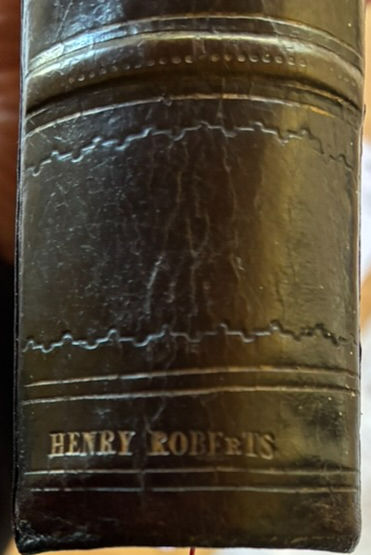
I recently repaired a lovely leather bound bible in Welsh for a family whose ancestor was a preacher in North Wales. I noticed something in the gold tooling on the spine which made me smile. I can only speculate at how this happened but one of the letter Rs is a different font size to all of the others. As it looks like the tooling was done with individual handle letters (they wiggle around a little at the bottom), I can imagine that there were a range of handle fonts on the heater and the binder was distracted halfway through by something, they glanced back at the heater, picked up an 'R' and tooled the wrong font.
However, as I say at the start, you only get one go at it and once it is done, it is done!


Comments